- calendar_today August 5, 2025
Georgia, a southeastern U.S. state once known for its affordable property insurance and low disaster risk, is now confronting a growing crisis. Homeowners across the state are reporting steep insurance rate hikes and, in some cases, complete loss of coverage as insurance companies pull back from vulnerable regions.
The reasons are clear: intensified storms, recurrent flash floods, and changing climate patterns have made insuring property in Georgia far riskier — and costlier — than in previous years.
In 2025, many residents in coastal and inland flood-prone areas like Savannah, Brunswick, and Macon are seeing double- or even triple-digit increases in their home insurance premiums. Some say their policies were simply not renewed, while others are forced to switch to last-resort state-backed insurers, often at higher rates and with reduced protections.
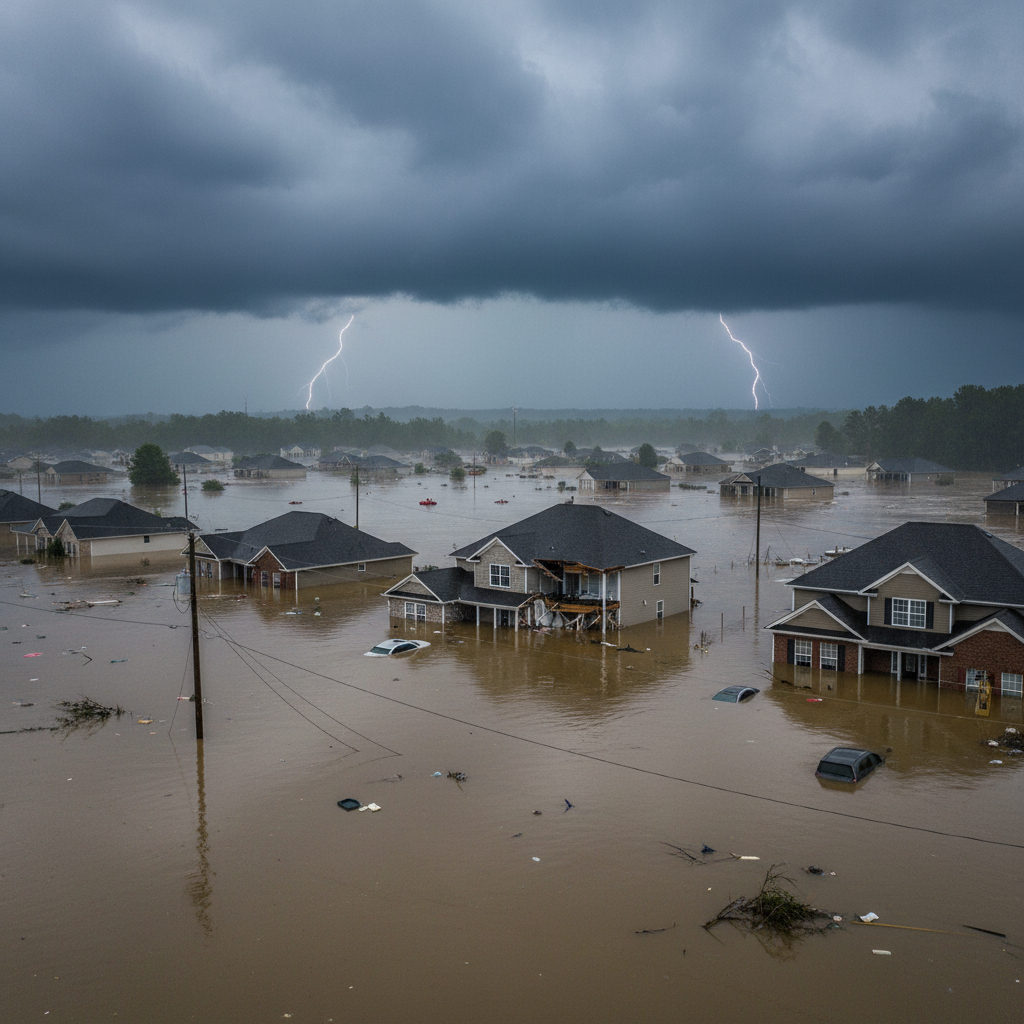
Insurers point to a sharp rise in claims due to flash flooding, hurricane wind damage, and tornado outbreaks. According to recent state data, severe weather events in Georgia cost the insurance industry more than $3.1 billion in 2024 alone — a nearly 200% increase from five years ago.
Impact on Real Estate and Affordability
Georgia’s red-hot housing market, especially in metropolitan areas like Atlanta and growing suburbs, is also feeling the effects. Real estate agents report slower closings as buyers hesitate to move forward without affordable coverage. Some homes are staying on the market longer, especially in flood-prone zones near rivers or low-lying terrain.
A 2025 report from the Georgia Association of Realtors showed that 1 in 4 buyers reconsidered a home purchase due to insurance costs. Mortgage lenders are also more cautious, sometimes requiring excess insurance coverage that further increases monthly payments.
A Statewide Concern, Not Just Coastal
While coastal areas are hit hardest, even inland communities are not immune. Middle and northern Georgia towns like Athens, Rome, and Gainesville have seen an uptick in heavy rainfall and occasional tornadoes, prompting insurers to reevaluate regional risk models.
Unlike coastal Louisiana or Florida, Georgia previously benefited from moderate weather conditions. But now, FEMA flood zone maps are expanding, and private insurers are recalculating their exposure — with policyholders caught in the middle.
Government and Industry Responses
In response to the growing concern, Georgia’s Department of Insurance has proposed a statewide review of risk zones and coverage regulations. State officials are also calling for federal disaster relief and considering subsidies for residents in high-risk areas.
Meanwhile, private insurers are lobbying for policy flexibility and new premium-setting formulas that reflect individual property resilience, such as storm-resistant construction or elevated foundations. But critics argue that such measures shift responsibility from corporations to homeowners — many of whom can’t afford retrofitting.
Preparing for the Future
Experts warn that Georgia’s current crisis may only be the beginning if long-term climate trends continue. As weather patterns shift, the line between “safe” and “risky” zones is becoming increasingly blurred.
Local communities, such as Chatham County and parts of DeKalb, are investing in drainage improvements, updated zoning, and public education. However, these initiatives may take years to fully mitigate risk, and many homeowners are left with tough choices in the meantime.