
- calendar_today August 20, 2025
.
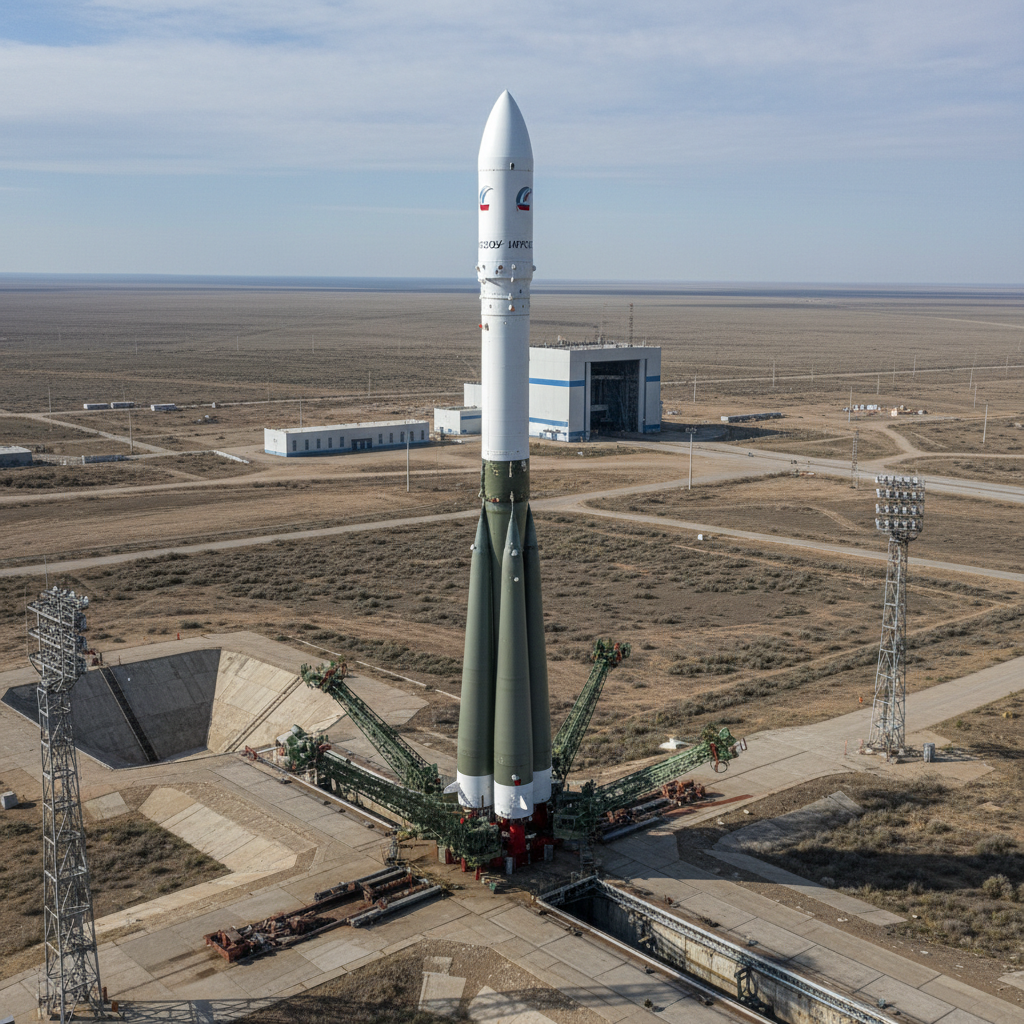
Russia is set to fly its latest rocket, Soyuz-5, sometime before the end of this year. In an interview with state news agency TASS earlier this week, Dmitry Bakanov, the head of Roscosmos, confirmed that the first liftoff of this new rocket was slated for December. “Yes, we are planning for December. All the preparations are almost done. Of course, the main thing is that it will fly from Baikonur,” Bakanov stated.
If all goes as planned, the launch from the Baikonur cosmodrome in Kazakhstan will mark the first test flight of the new vehicle. It has been in development for more than ten years, and Roscosmos anticipates several trial launches before it becomes fully operational. That could take until 2028.
A long-gestating project, Soyuz-5 (also known as Irtysh) has not been based on groundbreaking new technologies. Instead, much of its design comes from the Zenit-2 rocket, first proposed by the Yuzhnoye Design Bureau in Ukraine in the 1980s.
Zenit rockets, manufactured in Ukraine, used engines made in Russia known as RD-171. The Zenit was a curious exception to the rule of aerospace asphyxiation that defined post-Soviet cooperation between Russia and Ukraine for more than three decades. It effectively ended, however, when Russia invaded Ukraine in 2022, and by the end of 2023, Russia had bombed the Ukrainian plant where Zenit rockets were previously assembled.
Soyuz-5 is a larger, Russia-built version of the Zenit. The redesign means Ukraine has been cut out of the equation entirely, with all key components domestically made in Russia. For Moscow, that is considered a strategic success, ending years of dependence on the outside world while also finally replacing its aging Proton-M launcher.
Bridge to the Future
Technically, the Soyuz-5 is a medium-lift launch vehicle. It can boost about 17 metric tons to low-Earth orbit, with that performance coming from slightly larger propellant tanks than its Zenit predecessor. At its core, the rocket uses a new engine, called the RD-171MV. This is the newest iteration of an engine family with a long history.
RD-171 technology traces back to the Energia program of the 1980s, which in turn powered the Soviet space shuttle Buran, which never made a spaceflight after two tests with a robotic pilot. The latest RD-171MV is of particular note for one key reason: the engine has been made without any Ukrainian parts. The new engine is fueled by kerosene and liquid oxygen, providing more than three times the thrust of the Space Shuttle main engine, making it the most powerful liquid-fueled rocket engine in service.
However, Soyuz-5 is an expendable rocket. Newer players such as SpaceX’s Falcon 9 are built with reusability as a primary goal. The difference is key, as it casts serious doubt on whether Soyuz-5 will ever carve out a significant place for itself in the international launch market.
The vehicle is also more of a stopgap than a long-term solution for Roscosmos, the Russian space agency. Developing a new, purpose-built rocket designed for reusability from the ground up has proven difficult, particularly given the dual pressures of spending on the war and international sanctions. One such project, the Amur rocket (also known as Soyuz-7) was targeted to serve that purpose, with a reusable first stage and methane-fueled engines that could eventually compete with SpaceX on price. However, after years of delays, Amur’s debut has slipped to at least 2030.
For now, Soyuz-5 is the only option available to Roscosmos for building a new-generation space launch capability, even if it is only a bridge between the Soviet past and Russia’s spacefaring future. “We have made it a hundred percent with our own hands,” Roscosmos’ Bakanov declared of Soyuz-5, a point of some pride for the agency in light of the sanctions placed on Russia in the wake of its invasion of Ukraine.
International competition aside, the outlook for Soyuz-5 remains cloudy at best, with the commercial launch industry looking very different from ten years ago. SpaceX and more recently Chinese companies have provided far cheaper, more flexible options for getting payloads into orbit. Russia’s existing offerings, the Soyuz-2 and Angara family of rockets, both of which were also still in development more than ten years ago, continue to service missions for crewed launches and heavy payloads. However, neither has seen much success in international markets, and Soyuz-5 could face similar hurdles in finding a place for itself.
On the plus side, the fact that Roscosmos was able to bring Soyuz-5 close to launch readiness at all is an accomplishment under the circumstances. A successful December flight will go a long way to proving Russia can still put hardware on the launchpad, sanctions and budgetary shortfalls notwithstanding.
Soyuz-5 is not going to be a revolutionary launch vehicle. However, for Russia, it represents something of a diplomatic and industrial coup, able to provide a degree of independence from foreign suppliers. As such, it is likely to be treated as a bridge to the next step, whether that next step arrives with Amur or some future generation of rockets still in development.