
- calendar_today August 20, 2025
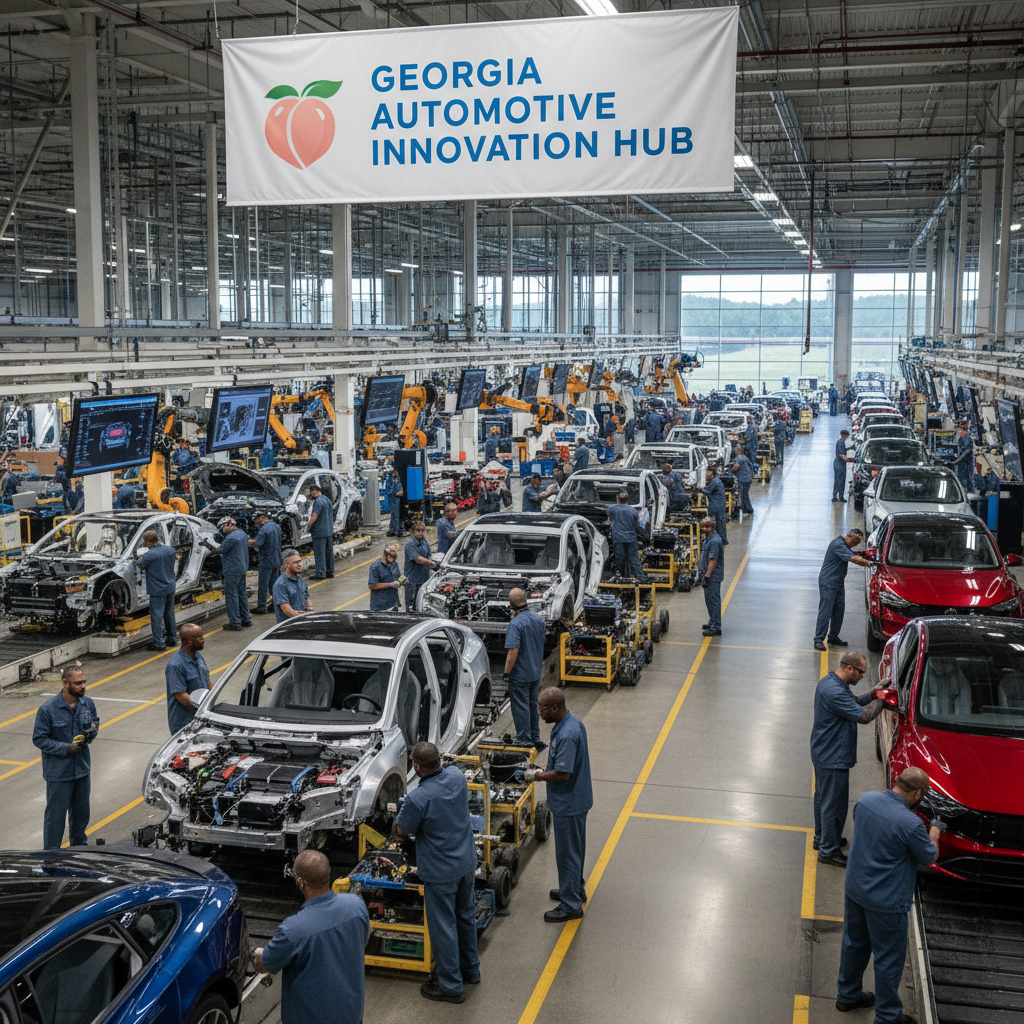
Georgia, once known primarily for its agriculture and logistics sectors, is rapidly becoming a center of gravity for the electric vehicle (EV) industry. With major EV plants underway, growing battery production, and robust state incentives, Georgia is reshaping its industrial identity, making it a fertile environment for EV-focused investors.
As Fisker Inc. attempts to regain its footing in the competitive EV market, investors across Atlanta, Augusta, and Savannah are asking: Does Fisker’s long-term growth potential justify the risk in a state already home to powerful EV players and supply chains?
A 2025 Crossroads for Fisker
Fisker (NYSE: FSR) enters the second half of 2025 under considerable strain. The Ocean SUV was initially praised for sustainability and design, but execution issues—ranging from supply chain breakdowns to production delays—caused the company’s valuation to tumble below $1.3 billion, a stark fall from its post-SPAC high.
Still, for Georgia-based investors—many of whom are closely watching the growth of companies like Rivian, Hyundai, and SK Battery America—Fisker presents a speculative opportunity tied to the state’s broader EV transformation. With the Pear model expected by mid-2026, there’s renewed interest in whether the company can deliver amid regional momentum.
Forecasting Fisker’s 2030 Price Path
Fisker’s road to 2030 features three broad valuation paths:
Bull Case: If Fisker hits full-scale production on both the Ocean and Pear, and brings the Alaska truck to market, the company could sell over 200,000 vehicles annually. That level of execution could yield $6–$8 billion in revenue, potentially driving the stock price to $25–$30. In Georgia, particularly around Atlanta’s tech corridor and EV manufacturing belt near Savannah, such an outcome would affirm the state’s position as a clean mobility leader.
Base Case: A more cautious scenario projects 75,000 to 100,000 units sold per year and $3–$4 billion in revenue. This could push the stock into the $8–$12 range. Georgia investors interested in green tech exposure without extreme risk might find this outcome suitable for diversified portfolios.
Bear Case: If production stalls continue or liquidity deteriorates, Fisker may be limited to under 50,000 sales annually. That could keep revenue below $2 billion and the stock price in the $3–$5 range—untenable for most conservative investors or Georgia retirees seeking stability.
Industry Context: Georgia’s Manufacturing Boom and Policy Environment
Georgia is undergoing an industrial renaissance centered on clean transportation. Rivian’s massive $5 billion EV plant in Morgan County, Hyundai’s $7.6 billion EV and battery complex near Savannah, and SK Battery America’s operations in Commerce position the state as a national EV production hub.
This robust ecosystem benefits companies with a domestic footprint, but Fisker remains at a disadvantage. Its vehicles are produced overseas by Austria’s Magna Steyr, which means they don’t qualify for full Inflation Reduction Act (IRA) tax credits. In Georgia, where policy is aligned with federal incentives and manufacturing pride runs deep, this could dampen consumer enthusiasm and investor confidence.
Unless Fisker pivots to North American manufacturing—potentially through a partnership with domestic firms or contract assembly in the South—it may struggle to compete in Georgia’s value- and policy-driven market.
Investor Sentiment and Georgia’s Financial Profile
Georgia’s investment scene is diverse. Atlanta alone boasts a robust mix of institutional capital, fintech startups, and ESG-minded venture funds. At the same time, many Georgia investors maintain traditional values, focusing on profitability and domestic economic impact.
Institutional sentiment toward Fisker soured in early 2025 amid missed targets and liquidity concerns. However, younger retail investors in cities like Athens and Savannah—many of whom align with sustainability trends—are still watching Fisker as a high-risk, high-reward play.
Regaining investor confidence in Georgia will likely depend on strong late-2025 performance and whether the Pear model sees successful U.S. deployment.
Looking Ahead: The Road to 2030
With multibillion-dollar investments pouring into clean mobility, Georgia’s EV sector is no longer speculative—it’s foundational to the state’s economic future. For local investors, the challenge is distinguishing between viable long-term bets and short-term hype.
Fisker’s success in Georgia will hinge on how well it aligns with regional manufacturing trends, tax credit eligibility, and consumer sentiment. Without domestic production or consistent delivery metrics, the company risks being outpaced by rivals deeply embedded in Georgia’s industrial resurgence.
For now, Fisker offers a speculative opportunity with potentially high upside, but also considerable volatility. In a state surging toward clean transportation leadership, investors should weigh whether Fisker can catch up to the pace Georgia has already set.