
- calendar_today August 27, 2025
AI Is Coming for Half of All Jobs — Georgia Needs to Get Ready
Artificial intelligence is no longer some distant, science fiction idea—it’s already revolutionizing workplaces everywhere. Based on worldwide labor predictions, by 2030 as much as 50% of all U.S. jobs might be displaced or significantly changed by automation and AI. For Georgia, a state with a robust, diversified economy including agriculture, logistics, tech, and hospitality, the waves will be felt across the state, from Atlanta to Albany.
But AI is not only about job loss, it is about job transformation. While some jobs will vanish, others will change, and completely new careers will be created. Georgia’s challenge is obvious: prepare today to succeed tomorrow.
How AI Is Altering the Character of Work
AI encompasses a broad set of technologies—robotics, machine learning, natural language processing, and data-driven decision-making. Already, these tools are being employed to automate routine tasks, boost efficiency, and improve decision-making.
In Georgia, this translates to:
- Smart customer service technology across companies
- Supply chains in logistics centers such as Savannah powered by AI
- Intelligent instruments assisting physicians, farmers, and financial analysts
- Software and robots performing tasks previously performed by hand
In short, no sector is immune—but not everyone is vulnerable equally.
Industries Most Impacted in Georgia
Logistics and Warehousing
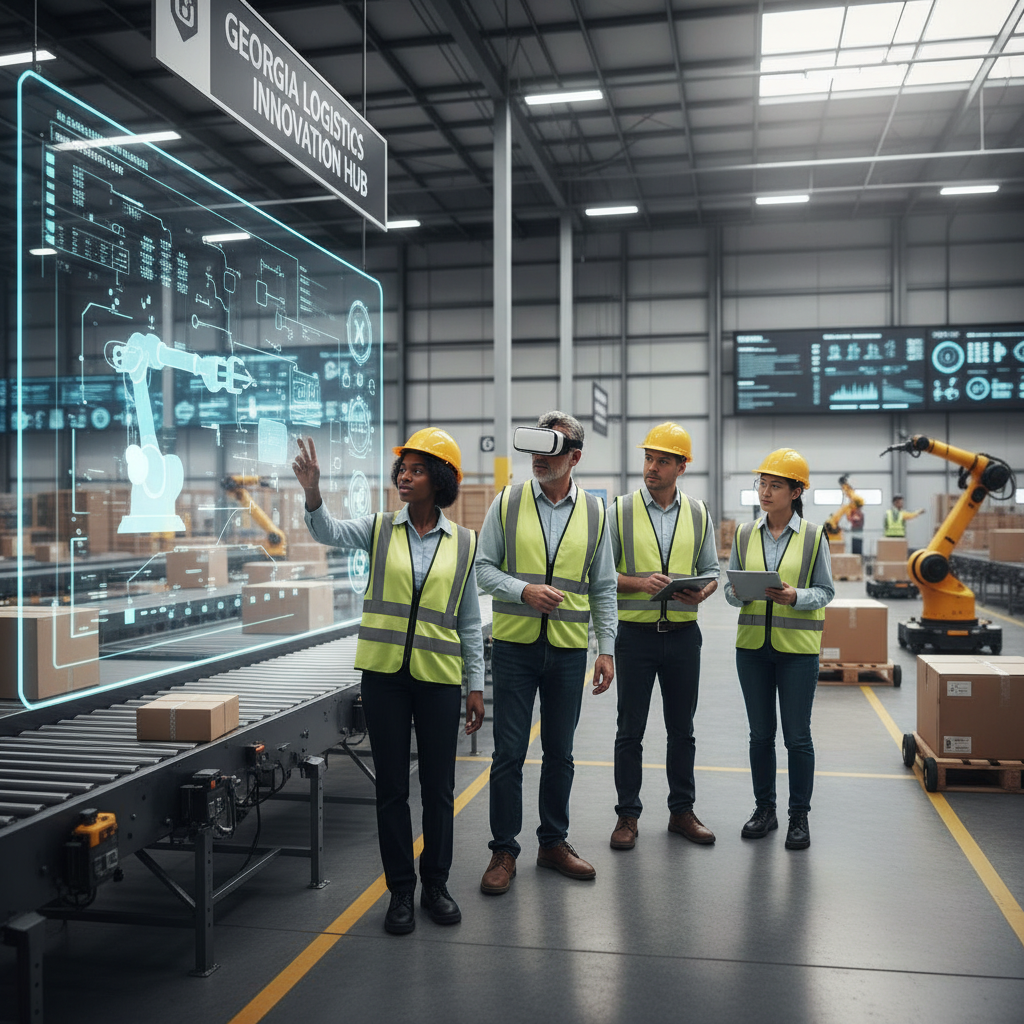
Georgia is a logistics hub, particularly near the Port of Savannah and near Atlanta’s airport. Robots powered by artificial intelligence, tracking devices, and sorting machines put many standard warehouse positions at risk. Yet, more and more jobs are being sought in robotics repair, system analysis, and logistics planning.
Agriculture
Farmers throughout Georgia are embracing smart sensors, artificially intelligent planting systems, and robotic harvesters. Though old-fashioned farmhands might decrease, data-skilled agricultural technicians will be sought after.
Hospitality and Retail
Georgia’s vibrant tourism, hotel, and retail sectors—most notably in Atlanta and Savannah—are increasingly embracing AI for reservations, customer contact, and stock control. Employees in these industries will have to transition toward customer experience and relationship-building positions.
Healthcare
Georgia’s clinics and hospitals are starting to use AI to diagnose patients, schedule appointments, and even assist in surgeries. Administrative positions might be reduced, but clinical ones that require technical skills will grow.
Georgia’s Tech Industry: A Success Story
Atlanta is on the path to becoming the South’s center of tech innovation. Businesses are investing in AI businesses, and institutions like Georgia Tech are leading the way in research and training in AI. For employees, this means:
- Additional high-skilled tech employment
- Career opportunities in AI ethics, cybersecurity, and engineering
- More robust ecosystem for reskilling and innovation
If harnessed effectively, AI has the potential to create as many jobs as it displaces in Georgia’s technology economy.
Rural vs. Urban Divide
Closing the rural-urban skills gap will be one of Georgia’s largest challenges. In Atlanta, Columbus, and Augusta, there is access to education and internet infrastructure, making AI adoption less challenging.
Conversely, rural counties could experience worse disruptions without adequate investment in job training, internet connectivity, and employment support. Statewide coordination will be essential to make sure all Georgians have access—not only city residents.
What Georgia Workers Can Do to Stay Ahead
The transition to AI can be daunting, but getting ready can be a huge game-changer. Here’s how Georgia’s workers can adjust:
Upskill Early
Begin learning AI fundamentals, data literacy, or programming. Online platforms and community colleges provide low-cost, flexible opportunities.
Develop Human-Centric Capabilities
AI is unable to replace empathy, creativity, or high-level human judgment. Leadership, relationship-building, and emotional intelligence jobs will continue to be vital.
Welcome Career Transitions
Career changes or integrating old-school experience with new technical skills can lock in your profession.
Invest in Growing Industries
Areas such as health tech, clean energy, cybersecurity, and AI development are expanding rapidly—and Georgia is investing in numerous them.
What Georgia Employers and Leaders Need to Do
For Georgia to flourish in the AI economy, it will not suffice for workers to do their own part. Employers and policymakers need to step up too.
- Firms need to invest in training schemes that enable their staff to adapt with technology.
- Schools should teach coding, critical thinking, and tech literacy from an early age.
- Lawmakers must prioritize rural broadband, job transition funds, and innovation incentives.
- With the right policies, Georgia can become a national leader in smart job transformation.
A Future Georgia Can Lead
Yes, half of the jobs today will be different by 2030—but not necessarily half of Georgia’s employees will be left behind. If the state steps up to adopt AI responsibly, it can create a more robust, more resilient workforce that combines tradition and technology.
AI is not coming for us. It’s coming to work with us. But we need to be prepared—and Georgia has what it takes to transition, evolve, and lead.