
- calendar_today August 17, 2025
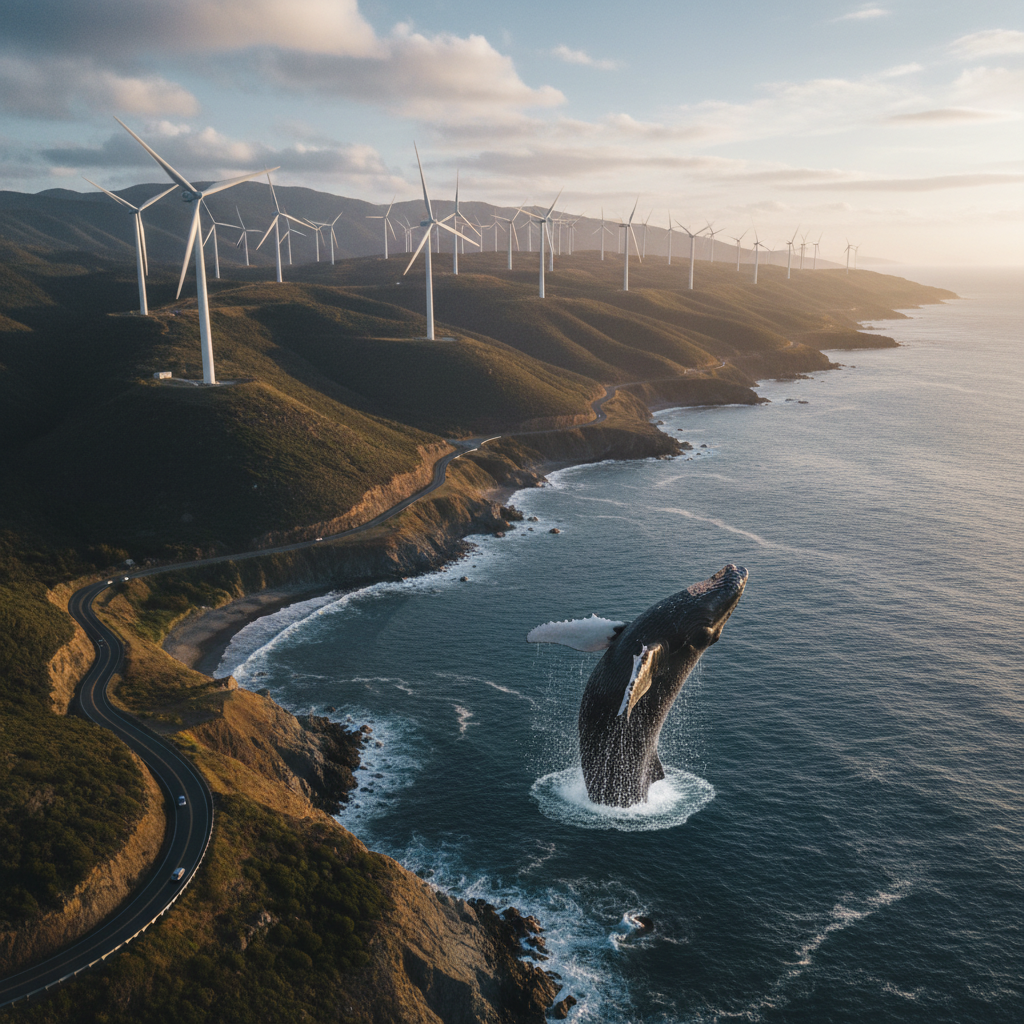
On the 26th of April 2024, what was meant to be a press conference regarding a European Union trade deal quickly turned into the former U.S. president Donald Trump attacking renewable energy sources. Wind turbines, he said, are a “con job” because they drive whales “loco,” kill birds, and even poison and electrocute people. While this might be eye-catching for its bravado, Trump is by no means the first person to voice such sentiments. The conspiracy theories about wind energy that he was advancing are nearly as old as the energy transition itself, and have appeared in various forms in the U.S. and other countries over the last 30 years.
Trump’s preference for the term “windmill” is just one example of what’s been described as the codified shorthand of the climate denier subculture. These conspiracies also show the same impulse to technophobia as some of their 19th-century precursors: it was popularly believed back then that telephones would be used to spread leprosy and other diseases. In both instances, it’s been argued, technological upheaval can lead to fear of change, whether it’s to existing ways of life or to perceived sources of personal or institutional power.
Suspicions about renewables run much deeper than ignorance, however, and academic research has found that such attitudes are unlikely to be overturned by fact-checking, as they are often bound up in personal and political identity. This makes it difficult for governments and other institutions to combat, at a time when the transition to clean energy needs to be as swift as possible.
The origins and proliferation of wind conspiracies
Warnings that carbon dioxide emissions would lead to a deeply altered environment over the next century have been part of climate science since at least the 1950s, but until recently, the early campaigning for renewable sources of energy was less about confronting scientific findings and more about fighting for market share with fossil fuel companies. This trope was parodied by The Simpsons in one of the most famous episodes of the long-running show, when the Springfield tycoon Mr. Burns erects a tower that blocks out the sun and forces everyone to buy his nuclear energy. The scenario is a satirical exaggeration of how fossil fuel interests might try to stop or slow renewable uptake.
Fears that this might happen were not misplaced: In 2004, then–Australian Prime Minister John Howard set up a secret meeting of fossil fuel executives from around the country called the Low Emissions Technology Advisory Group. The ostensible aim of the group was to look into opportunities for reducing carbon emissions, but in practice its members saw themselves as working to slow the uptake of renewables, to “minimise the long-term risk to the coal industry, oil industry and gas industry.”
Wind farms, in particular, became a popular target for opposition to renewables, as a 2019 Reuters report made clear. For one thing, while coal mines, oil fields, and even nuclear plants are often out of sight of the general public, wind turbines are large, highly visible, and often deliberately placed on ridgelines or other exposed areas of land. Conspiracy theories about how they would sicken people through electromagnetic fields or spread disease-carrying pigeons were common, even though so-called “wind turbine syndrome” was dismissed as a “non-disease” by the British Medical Journal in 2009.
Academic research has lent further credence to the idea that attitudes towards wind power are more influenced by belief in conspiracy theories than by demographic factors such as age, gender, education, or political affiliation. Kevin Winter and his colleagues analyzed the responses of a German sample to statements including both pro-wind turbines and conspiracy theory prompts, and found that the latter was a better predictor of respondents’ answers than any of the traditional demographic factors. Similar results were found in later studies from the U.S., U.K., and Australia. One U.K. study, for example, showed that those who were more likely to think wind turbines were controlled by the government or “damage the ecology” were also more likely to believe in theories about climate change being a hoax or energy sources being controlled by “secret elites.”
For people who do fit the former description, counter-evidence isn’t likely to be persuasive. Evidence that wind farms are unlikely to poison groundwater or cause widespread blackouts does little to counter an opposition that’s “rooted in people’s worldviews,” as Winter and his colleagues put it, not just in a mistaken reading of the available facts.
Wind turbines and their accompanying farms also seem to have become symbolic totems of the culture wars. For their supporters, they’re seen as symbols of progress, modernity, and collective action against climate change. But for people opposed to them, wind farms can feel like unwanted intrusions by centralised power into their personal lives, livelihoods, and even local environments.
One reason may be that a popular source of energy also fueled an entire economic and cultural era, and the thought of losing it feels like a rejection of a personal or national past. Some academics have described this impulse as “anti-reflexivity,” a refusal to reflect on and critique the downsides of a particular power source, system, or activity. Trump himself often veers into nostalgia for the coal, oil, and gas era.
In other communities, such as certain parts of the “manosphere” online, the debate is also filtered through identity politics: concerns about climate change are rejected as feminine, weak, or effeminate. And for some people, particularly white heterosexual baby boomers, the clean energy transition represents the end of an era in which their power and privilege once felt secure. For that reason, the fight against renewables is also as much about cultural and personal identity as it is about technology or energy policy.